
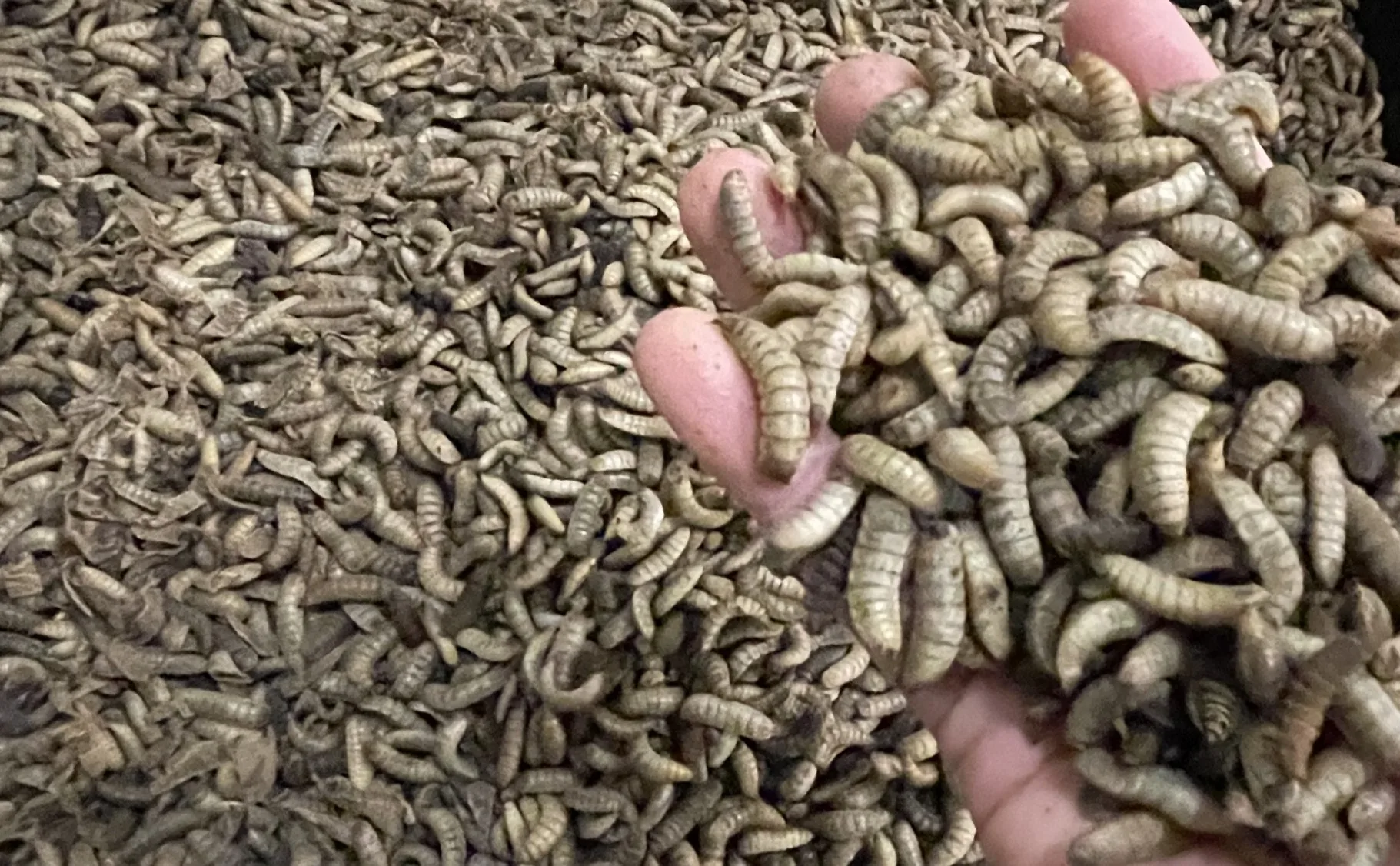
Processing and stabilization in BSF production
Where energy, quality, and risk collide
Processing and stabilization in BSF production are often treated as downstream details, something to “add later” once larvae production works. In reality, processing determines whether larvae become a usable, safe and storable product at all. Many BSF facilities do not fail at rearing, rather because processing capacity, energy demand, or stabilization logic does not scale with output.
Stabilization in BSF production is not optional
Fresh BSF larvae are biologically active and much too often unnecessary wet. Without rapid stabilization:
– Microbial activity continues
– Quality degrades or larvae start the metamorphosis to next stage
– Odor and hygiene risks may increase
– Storaging becomes problematic
Processing is not about adding value first, but to control the process.
The three stabilization pathways
Most BSF operations rely on one of three stabilization approaches:
1) Drying
– Long shelf life
– Energy costs
– Overall impact on OPEX
Drying is robust but unforgiving. Undersized dryers quickly become the system bottleneck.
2) Thermal kill + short-term storage
– Lower energy use
– Short shelf life
– Requires strict logistics processes
This approach shifts risk downstream instead of eliminating it.
3) Partial processing (oil, paste, or pre-products)
– Intermediate stability
– Higher complexity
– Less or tougher business potential
– More process control required
This pathway only works when volumes and flows are already stable. These outputs are also typically tough to make profitable with current volumes, competition and price levels.
Drying: the most common bottleneck
Drying capacity is frequently underestimated because:
– Moisture content is higher than assumed
– Peak harvest days exceed average loads
– Dryer efficiency drops at high throughput
A dryer sized for “average output” will fail during peak days, and peak days are unavoidable in batch systems. Check out our other blogs, we’ve discussed this issue already in detail earlier.
Processing quality starts upstream
No processing system can fix:
– Bad substrate choices or mix
– Delayed harvest
– Poor separation
– Contaminated batches
When processing struggles, the root cause is often upstream, not in the processing equipment itself.
Buffering and decoupling are critical
Processing should be able to:
✔ Run continuously
✔ Absorb daily fluctuations
✔ Catch up after interruptions
This requires:
✔ Buffer storage before processing
✔ Clear prioritization of batches
✔ Separation between biological and thermal steps
Without buffering, processing becomes reactive and inefficient.
Compliance risk grows at the processing stage
This is where BSF operations intersect with:
– Feed safety
– Fertilizer or soil standards and/or requirements
– Traceability and documentation
Incomplete stabilization in BSF production increases regulatory risk even when upstream production is sound.
A practical processing rule of thumb
When designing processing capacity, assume: Peak load, not average. If the system cannot handle the wettest, heaviest day, it will not be reliable. Processing and stabilization in BSF production are where the production becomes a real industrial operation.
Facilities that:
✔ Size processing generously
✔ Control moisture upstream
✔ Build in buffers
✔ Design for peak conditions,
achieve stable quality and predictable costs.
Learn more about BSF farming in the
Insect Farm Hub!
Manna Insect has launched a comprehensive insect farming platform designed for learning, managing, monitoring and networking. There are tons of free content about insect farming, as well as a lot of paid premium content, that dives even deeper in black soldier fly business.
In the next article, we’ll step back and look at frass handling and utilization, and why this by-product often determines overall system efficiency.
Do you already follow us in LinkedIn? We share insights and news about insect farming and BSF business daily in Manna Insect LinkedIn page, come and join the discussion!
Read also:
Feedstock management in BSF production
Production capacity in BSF farming
CAPEX in BSF production
OPEX in BSF production
Building a professional level BSF farm for under $10,000
Top 10 most viable BSF business cases for 2025-2026