Evaluating BSF frass quality: Key factors, measurement and business value
BSF frass (black soldier fly manure) is a valuable byproduct of BSF farming, used as an organic fertilizer and soil amendment. However, its quality varies depending on feedstock, production methods, and post-processing. To maximize its market value, farmers must assess frass quality based on key parameters and understand its financial impact.
Key factors influencing BSF frass quality
Feedstock composition
✔High-quality feedstocks (fruit/vegetable waste, grains) produce nutrient-rich frass.
✔Low-quality or contaminated feedstocks (meat, dairy, moldy waste) may reduce frass safety and efficacy.
Larval digestion efficiency
✔Well-fed larvae break down organic matter more thoroughly, improving frass nutrient content.
✔Poor digestion leaves undigested chunks, reducing frass uniformity.
Moisture content and drying method
✔Fresh frass has high moisture (50–70%), requiring drying to prevent mold. NOTE! Depends highly on the production unit’s AC and climate control.
✔Sun-dried vs. mechanical drying: Mechanical drying preserves nutrients better but costs more.
Microbial activity and pathogen presence
✔Beneficial microbes improve soil health, but harmful pathogens (E. coli, Salmonella) can render frass unsafe.
✔Proper composting or pasteurization reduces risks.
NPK and micronutrient content
✔Ideal frass has a balanced N-P-K ratio (2-3-2 or similar) and micronutrients (Ca, Mg, Zn).
✔High-protein feedstocks increase nitrogen content.
How to measure and evaluate BSF frass quality
Chemical analysis (lab testing)
✔NPK Testing – Measures nitrogen, phosphorus, and potassium levels.
✔Organic Matter Content – Should be ≥60% for premium frass.
✔pH Level – Optimal range: 6.0–8.0 (neutral to slightly alkaline).
✔Heavy Metals & Pathogens – Ensures compliance with organic fertilizer regulations.
Physical inspection
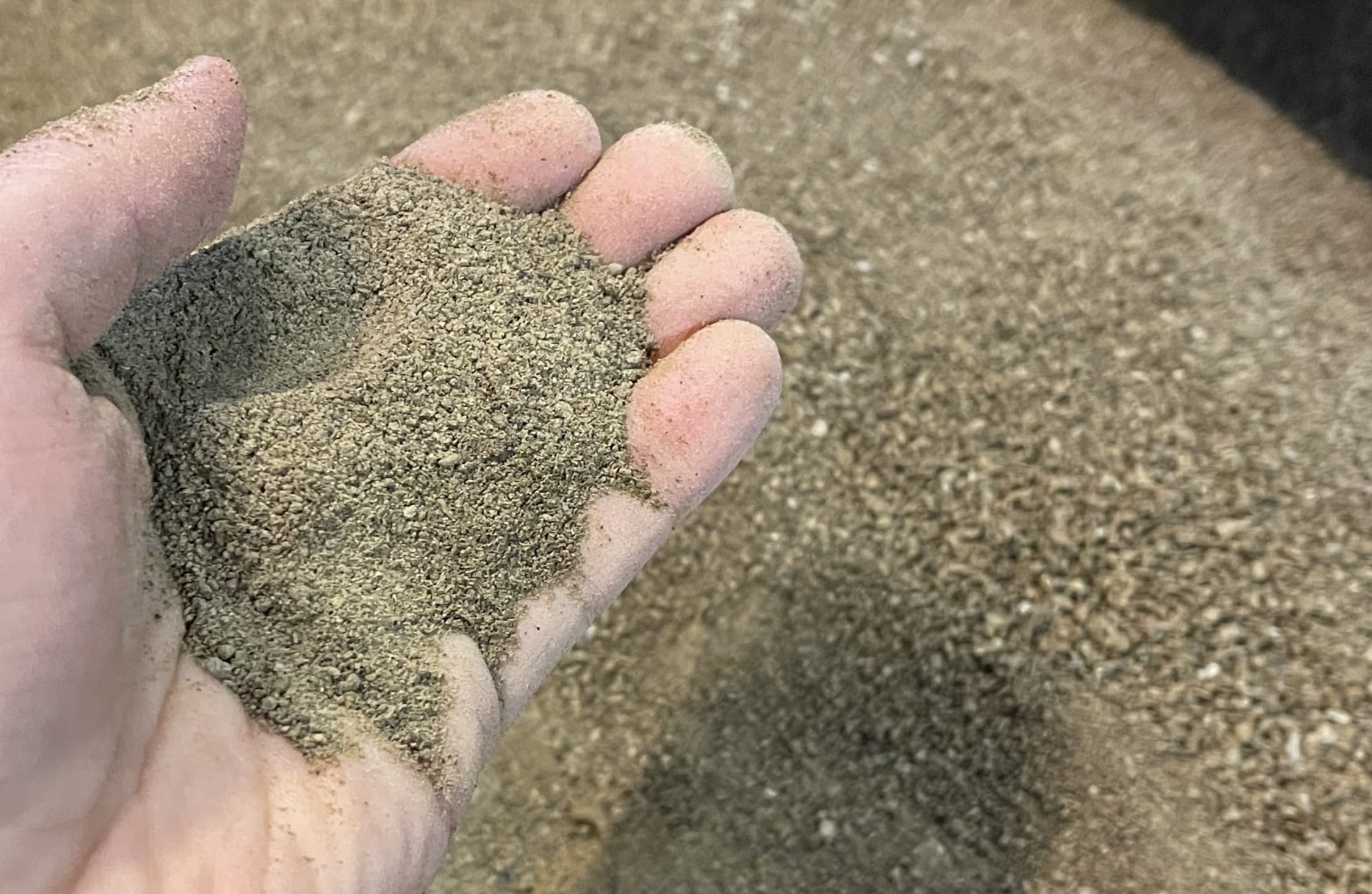
✔Texture – Should be fine, crumbly, and free of large undigested chunks.
✔Color – Dark brown/black indicates high organic matter.
✔Odor – Earthy smell is good; foul odors suggest poor decomposition.
Germination and plant growth tests
✔Conduct seed germination trials (e.g., cress or lettuce) to verify frass effectiveness.
✔Compare plant growth in frass-amended soil vs. control groups.
Business and monetary evaluation of frass output
Pricing and market demand
✔Low-grade frass (unprocessed, high moisture) sells for $0.10–$0.50/kg. NOTE! Highly related to regions / country, package size and the sales channel!
✔Premium frass (dried, screened, lab-tested) fetches $1–$5/kg in organic farming markets.
✔Value-added frass (pelletized, enriched with microbes) commands even higher prices.
Cost of production vs. revenue
✔Drying & processing costs – Sun drying is cheap but inconsistent; mechanical drying adds expense but improves quality.
✔Packaging & certification – Lab tests and eco-labels increase marketability but require investment.
ROI from frass sales
✔Calculate profit margin:
Revenue per kg – Market price × total kg sold.
Cost per kg – (Substrate + labor + drying + packaging) / total kg produced.
✔Secondary revenue stream – Frass can contribute 10–30% of total BSF farm income.
Competitive advantage
✔Certified organic frass can access premium markets (organic farms, hydroponics).
✔Consistent quality builds long-term buyer relationships and repeat sales.
Key takeaways for BSF farmers
✔Optimize feedstock to enhance frass nutrient content.
✔Test NPK, pathogens, and organic matter to ensure quality.
✔Invest in proper drying & processing to increase shelf life and value.
✔Market frass effectively—highlight lab results and organic certifications.
✔Track production costs vs. sales revenue to maximize ROI.
By rigorously evaluating BSF frass quality and aligning production with market demand, BSF farmers can turn a waste byproduct into a profitable revenue stream.
Learn more about BSF farming in the
Insect Farm Hub!
Manna Insect has launched a comprehensive insect farming platform designed for learning, managing, monitoring and networking. There are tons of free content about insect farming, as well as a lot of paid premium content, that dives even deeper in black soldier fly business.
Do you already follow us in LinkedIn? We share insights and news about insect farming and BSF business daily in Manna Insect LinkedIn page, come and join the discussion!
Read also:
Optimizing BSF frass processing: Techniques, equipment and value enhancement
Building a professional level BSF farm for under $10,000
Top 10 most viable BSF business cases for 2025-2026